

 (Пока оценок нет)
 Loading...
The vehicle control system is understood as a set of devices and (or) mechanisms designed to change the speed of the car and change the direction of movement.
The speed control system, simply the braking system, is the main safety component for the driver and passengers. It also serves for emergency braking if necessary.
The system for changing the direction of movement (steering) is used for “adequate” control of the car. Why adequate? Everything is very simple, it would be possible to install an autopilot for control, but not a single, even very “smart” automatic control system will be able to assess the road situation and react correctly. Do you know what kind of brake system was on the very first car? No! The driver simply filled in the required amount of fuel to get to a certain point, after which the engine stalled and the car stopped.
Currently, braking systems have advanced so far that semi-automatic brakes have appeared. The most common braking systems are hydraulic drum or disc brakes.
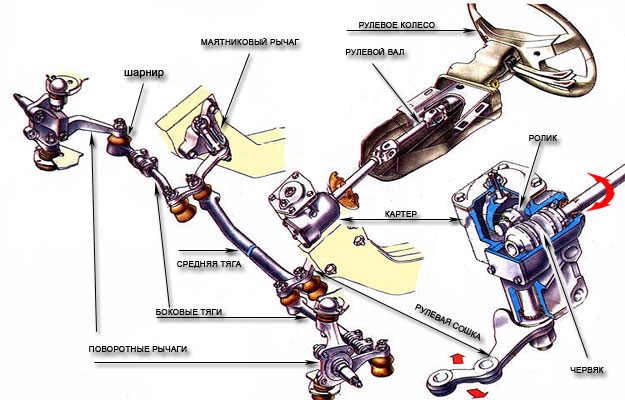
The steering of the first cars was not original; it was a simple lever system, which, when the steering wheel was rotated or the levers moved, turned the wheels in one direction or another. A modern steering control system is a complex unit where driver “assistants” are used – hydraulic boosters, traction control systems, etc. What about the steering levers? Of course, they remained, but they underwent very serious changes.
There is another control system on modern cars – an on-board computer, which takes on the function of monitoring and controlling components and mechanisms based on data received from external sensors.